Clara Werner · 4 October 2026
The Intersection of Machine Learning Algorithms and Automated Categorization in Secure Note Platforms for Global Enterprises
Secure note platforms designed for global enterprises rely on machine learning algorithms to handle large volumes of sensitive information while maintaining compliance across multiple jurisdictions, and automated categorization systems now form a core component of these platforms by organizing data without manual intervention. Researchers at institutions tracking enterprise software adoption report that organizations operating in more than twenty countries have integrated these technologies to reduce classification errors that previously averaged eighteen percent in manual processes, according to internal audits shared in industry reports from 2025.
How Machine Learning Powers Secure Note Systems
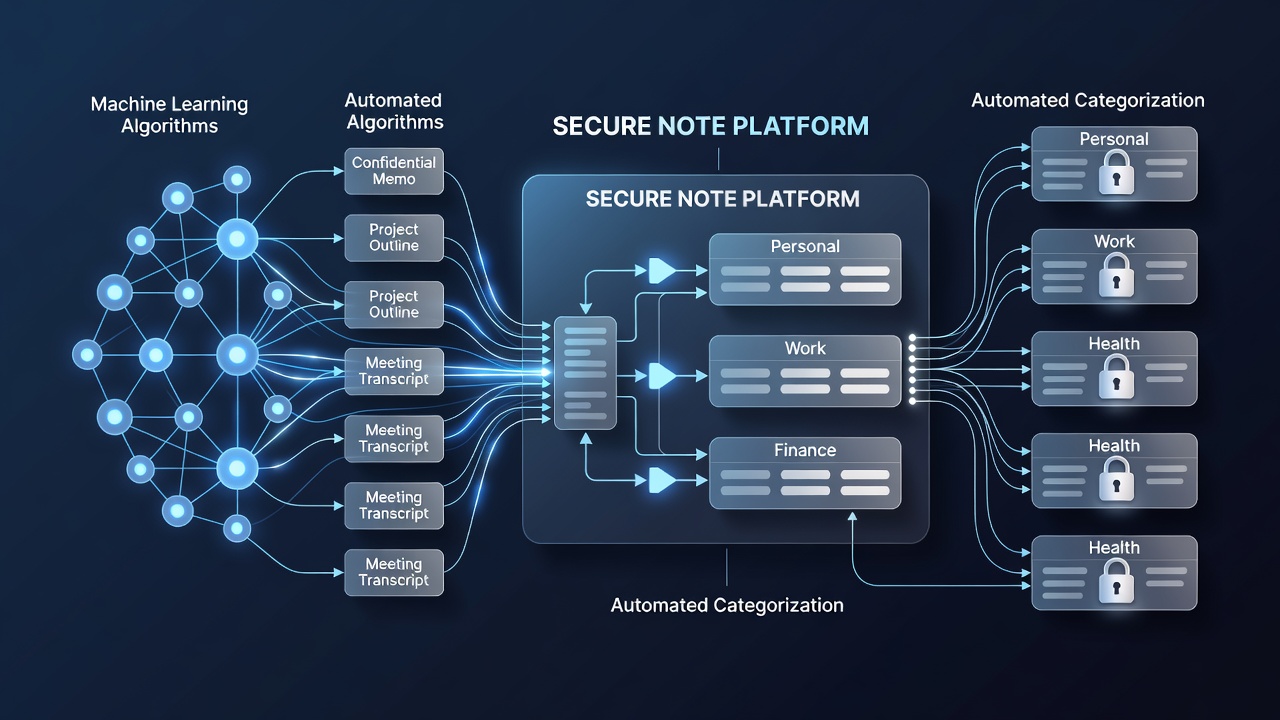
Algorithms trained on labeled datasets identify patterns in text, metadata, and access logs to assign categories such as financial records, client communications, or regulatory filings, and this process occurs within encrypted environments where models operate on tokenized representations rather than raw content. Data from deployments in North American and Asian enterprises show that supervised learning techniques, including support vector machines and transformer-based classifiers, achieve accuracy rates above ninety-two percent when retrained quarterly on region-specific compliance rules. The European Commission's documentation on trustworthy artificial intelligence highlights that such models must incorporate differential privacy mechanisms to prevent leakage of individual note contents during training cycles.
Automated Categorization Techniques in Practice
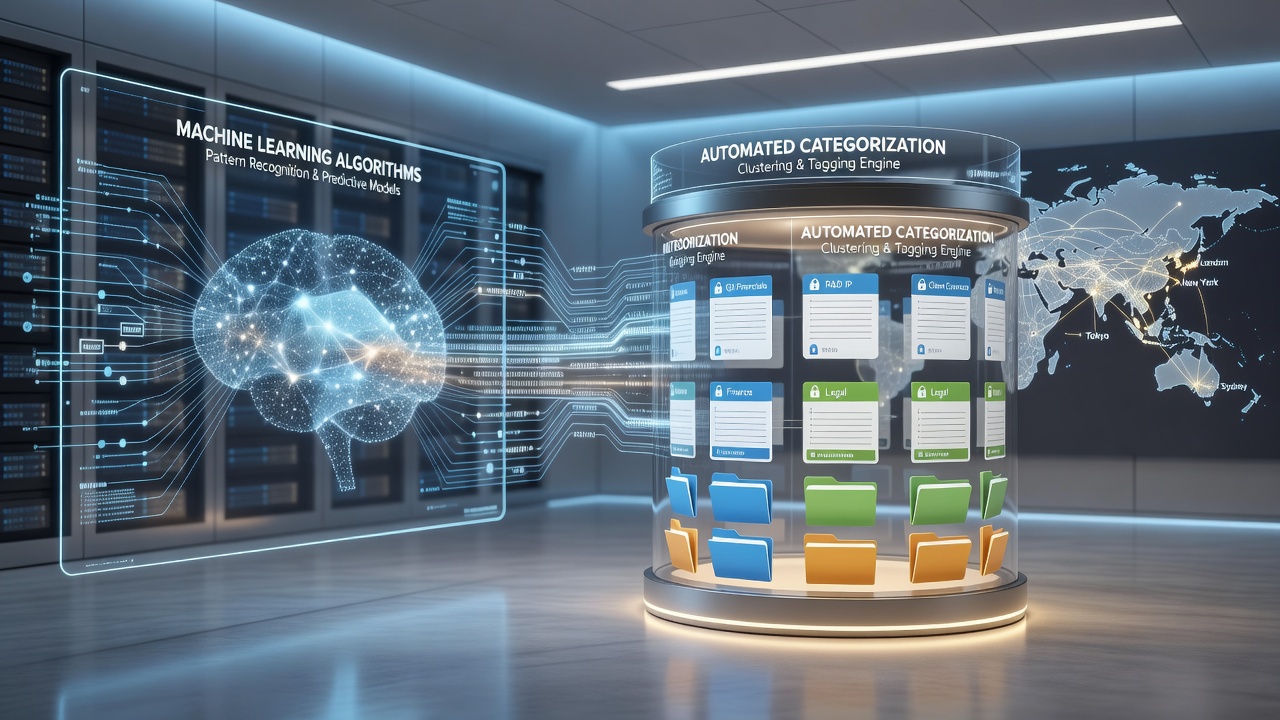
Automated categorization begins with natural language processing pipelines that extract entities, sentiment indicators, and structural elements from notes before feeding these features into clustering algorithms like hierarchical density-based spatial clustering, and once categories are assigned the system applies retention policies and access controls automatically. Observers at multinational firms note that unsupervised methods complement supervised ones by surfacing emerging topics that human reviewers later validate, which reduces the backlog of uncategorized items from weeks to hours in documented case deployments. Figures from a 2025 Canadian government report on digital innovation indicate that enterprises using these combined approaches reported a forty-seven percent drop in time spent on compliance audits.
Enterprise-Scale Implementation Patterns
Global organizations structure their secure note platforms around federated learning frameworks that keep data localized while allowing models to improve collectively across regions, and this architecture aligns with data residency requirements in jurisdictions such as Singapore and Brazil. Integration with existing identity providers occurs through API layers that log categorization decisions for audit trails, while real-time inference runs on edge nodes to maintain low latency for distributed teams. Studies published by academic groups in Australia have examined how these systems handle multilingual content, finding that cross-lingual embeddings maintain category consistency at rates exceeding eighty-five percent across English, Mandarin, and Spanish corpora.
Regulatory Alignment and October 2026 Developments
Platforms must map automated outputs to frameworks including the EU AI Act and emerging Canadian directives on automated decision-making, which require human oversight for high-risk categories. In October 2026, updates to international standards on machine learning transparency are scheduled for release, and platform vendors have begun preparing documentation that demonstrates how their categorization engines satisfy explainability requirements. Research indicates that organizations conducting preemptive bias audits on their models experience fewer regulatory queries during cross-border data transfers.
Performance Metrics and Observed Outcomes
Enterprises tracking key indicators report that machine learning-driven categorization reduces false positives in sensitive data flagging by thirty-one percent compared with rule-based predecessors, while throughput for daily note ingestion scales linearly with added compute resources. One logistics company operating across twelve countries documented a shift from sixty-four manual review hours per week to under nine after full integration, according to anonymized benchmarks shared at industry forums. These gains occur alongside continued requirements for periodic model validation to address concept drift in evolving business contexts.
Conclusion
The convergence of machine learning algorithms and automated categorization within secure note platforms enables global enterprises to manage information at scale while addressing compliance obligations across borders, and ongoing refinements in model architecture continue to support this operational model. Data from multiple regions confirm measurable improvements in efficiency and audit readiness, positioning these technologies as established components of enterprise information governance rather than experimental additions.